
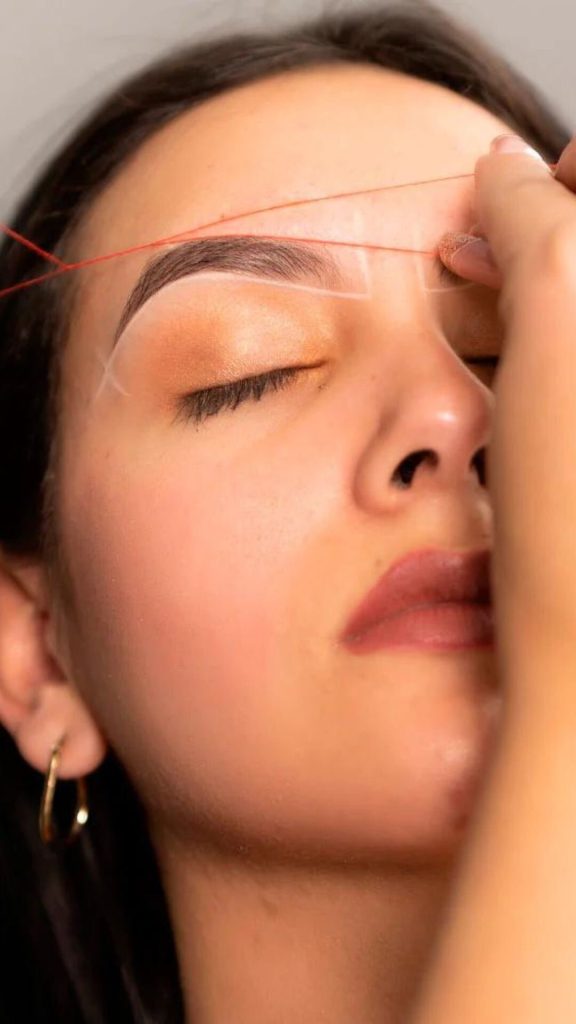
Threading and waxing are the two most requested eyebrow shaping methods, and both remove hair from the root rather than just trimming it. The right one for you usually comes down to skin type, hair growth pattern, and how precise you want the finished shape to be.
How Eyebrow Threading Works
Threading uses a twisted length of cotton thread to lift and remove individual hairs or small clusters of hair directly from the follicle. Because it works hair by hair, a skilled therapist can create very sharp, precise lines, which makes it a strong choice for anyone who wants a defined shape or has particularly fine or short hairs that wax struggles to grip.
Threading does not involve any chemicals or heated product touching the skin, which makes it a gentler option for sensitive or acne prone skin, including skin that is using retinol or other active skincare ingredients.
How Eyebrow Waxing Works
Waxing uses a thin layer of warm wax applied to the brow area and removed with a cloth strip, taking the hair with it. It covers a larger area in a single motion, which often makes it faster for clearing broader areas such as the space between the brows or stray hairs along the upper cheekbone.
Because wax makes contact with the skin, it is not recommended on skin that is sunburnt, freshly exfoliated, or using strong actives such as retinol, as this can increase the risk of irritation or lifting the skin.
Which One Should You Choose
If you want maximum precision, have sensitive skin, or are using retinol or other actives, threading is generally the safer and more accurate option. If you want a quick, broad clean up and your skin tolerates wax well, waxing can be a good fit. Many clients actually use threading for shaping the brow itself and waxing for the surrounding area, combining both for the cleanest overall result.
How Often Should You Get Your Eyebrows Threaded
Most people find their shape holds for around two to four weeks before regrowth starts to soften the line, though this varies with individual hair growth speed. Booking on a consistent schedule, rather than waiting until the shape has fully grown out, tends to keep the line sharper for longer since the therapist is only ever cleaning up light regrowth.
A qualified therapist can also advise which method suits your skin and hair on the day, since skin condition and hair growth can both change over time.